
10 Essential Tips to Build a Sales Page That Actually Converts
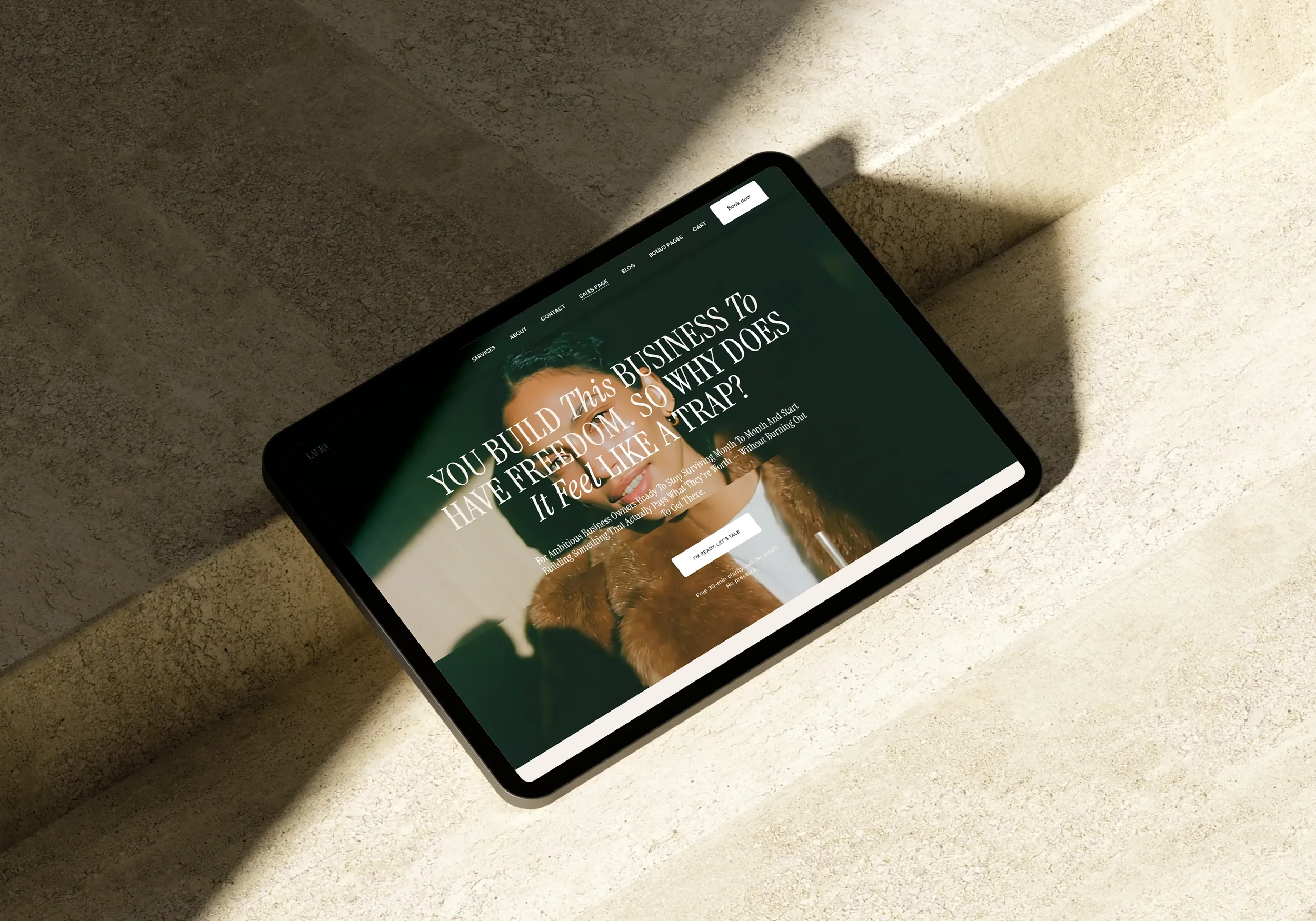
Make it stand out
Whatever it is, the way you tell your story online can make all the difference.
Most sales pages don't fail because the offer is bad. They fail because the page doesn't do its job — which is to take someone from "I'm curious" to "I'm in."
Here's what a high-converting sales page needs to get right:
1. Lead with a headline that earns attention
Your headline is the first thing a visitor sees — and most people decide in under 5 seconds whether to keep reading. Make it specific, benefit-driven, and directly relevant to the person you're trying to reach. Avoid clever. Aim for clear.
Bad: "Welcome to my world" Better: "Finally, a brand that makes your business look as good as it actually is"
2. Open with their problem, not your solution
Don't rush into what you do. Start by naming the situation your ideal client is in — their frustrations, their worries, the thing keeping them up at night. When someone reads the opening of your page and thinks "this is literally me", you've already done most of the selling.
3. Show you understand what's at stake
There's a difference between knowing someone has a problem and understanding why it matters. Go one layer deeper. What does the problem cost them — in time, money, confidence, opportunity? When people feel truly understood, trust follows naturally.
4. Introduce your offer with clarity
By the time you explain what you do, the reader should already feel like they need it. Now your job is to describe your service in plain language — what it includes, what the process looks like, and crucially, what they walk away with. No jargon. No vague promises. Just clear value.
5. Sell the outcome, not the deliverables
People don't buy a logo. They buy looking professional enough to charge more. People don't buy a website. They buy clients finding them online and reaching out. Always frame your offer in terms of the result it creates, not the tasks involved in creating it.
6. Back it up with real proof
This is where you let your past clients speak. Testimonials, case studies, before/afters, results with numbers — all of it builds credibility in a way self-promotion simply can't. One specific, detailed testimonial is worth ten generic ones. The more concrete the better: "I raised my prices by 30% two months after the rebrand" hits harder than "great experience!"
7. Handle the objections before they come up
Every potential client has a reason not to buy. Too expensive. Not the right time. Not sure it'll work for them. A good sales page anticipates these doubts and addresses them honestly — either through FAQs, through the way you frame your offer, or through a direct acknowledgment. Ignoring objections doesn't make them go away.
8. Make the investment feel worth it
Price is rarely the real objection — perceived value is. Before you reveal your price (or ask someone to get in touch), make sure the page has done the work of showing what the transformation is worth. When someone is already imagining the result, the cost feels like a reasonable trade.
9. One CTA, repeated clearly
Every section of your page should be pointing toward the same action. Book a discovery call. Send a DM. Click to apply. Pick one and repeat it — at the top, in the middle, and at the end. Multiple conflicting calls to action create confusion. Confusion kills conversions.
10. Keep it focused and easy to read
A wall of text is a conversion killer. Break up your content with short paragraphs, bold subheadings, and breathing room. Use plain language. Cut anything that doesn't serve the reader's decision. The goal isn't to impress — it's to make saying yes feel easy.
The bottom line
A great sales page isn't about being a good writer or having a big following. It's about understanding your ideal client well enough to speak directly to them, and making the path from interested to committed as frictionless as possible.
If your current page isn't doing that, now you know where to start.